Posture
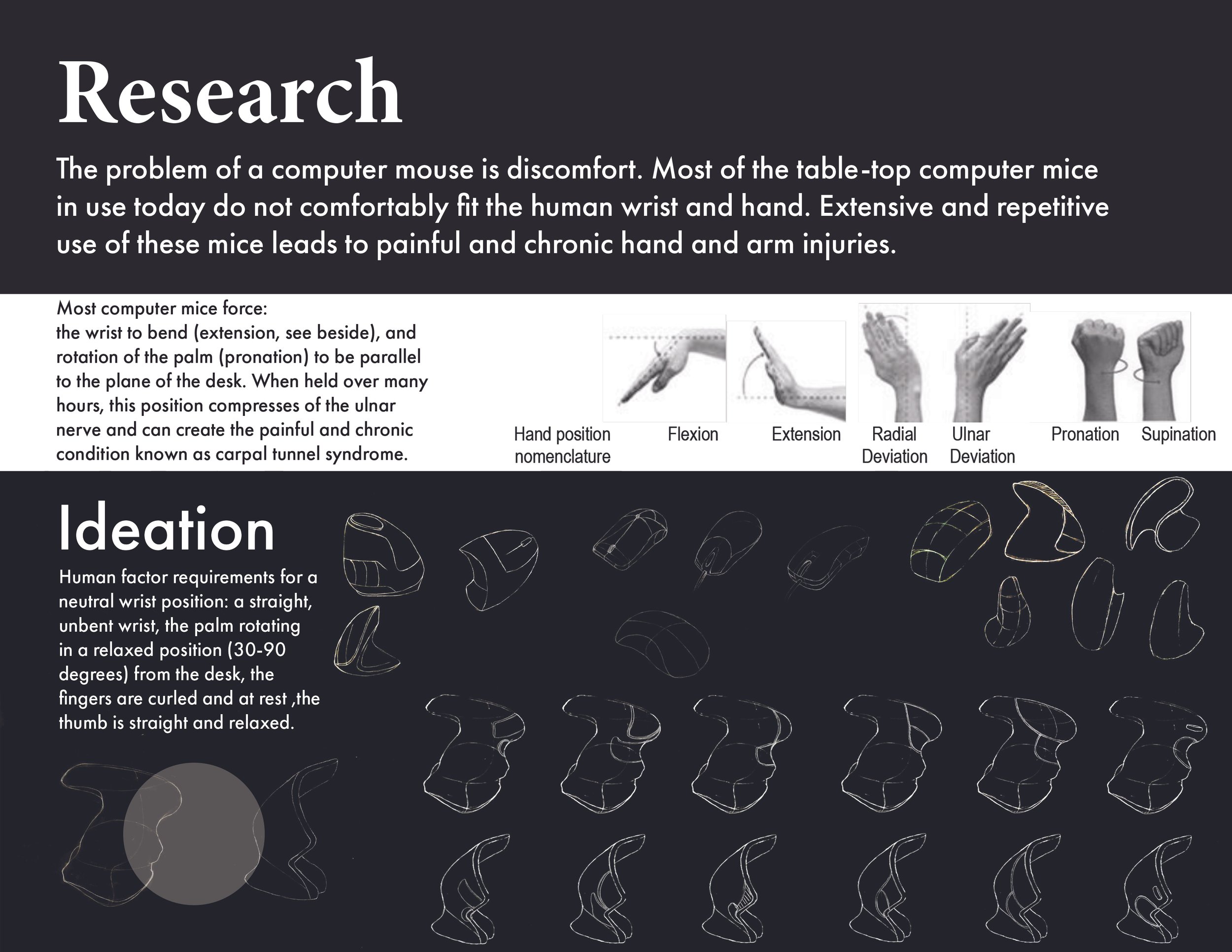
Explore an upright grip as the starting point for the form.
05 / Industrial design · Concept study
A vertical mouse concept developed through sketches, physical grip exploration, CAD, and product visualization.
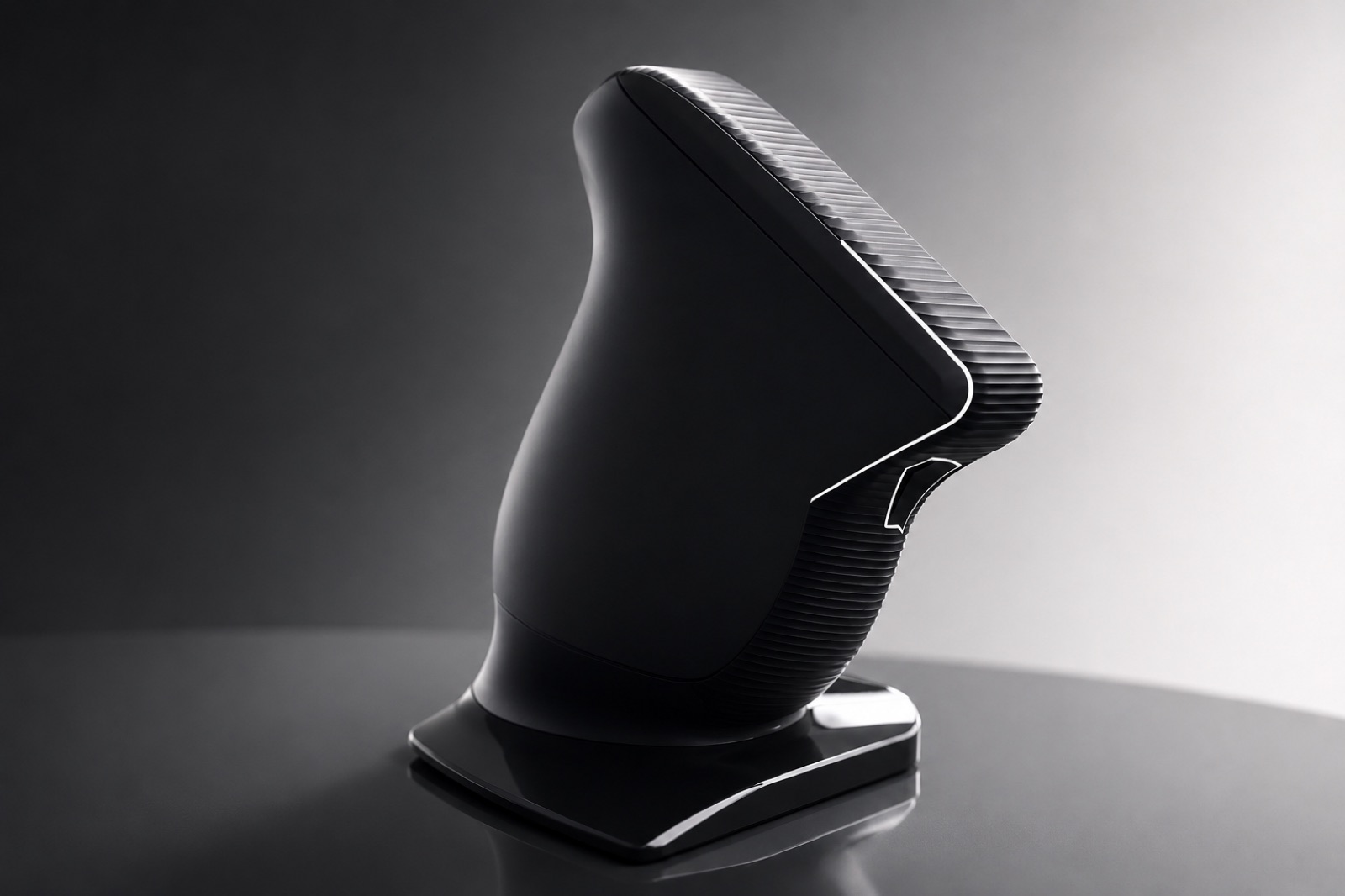
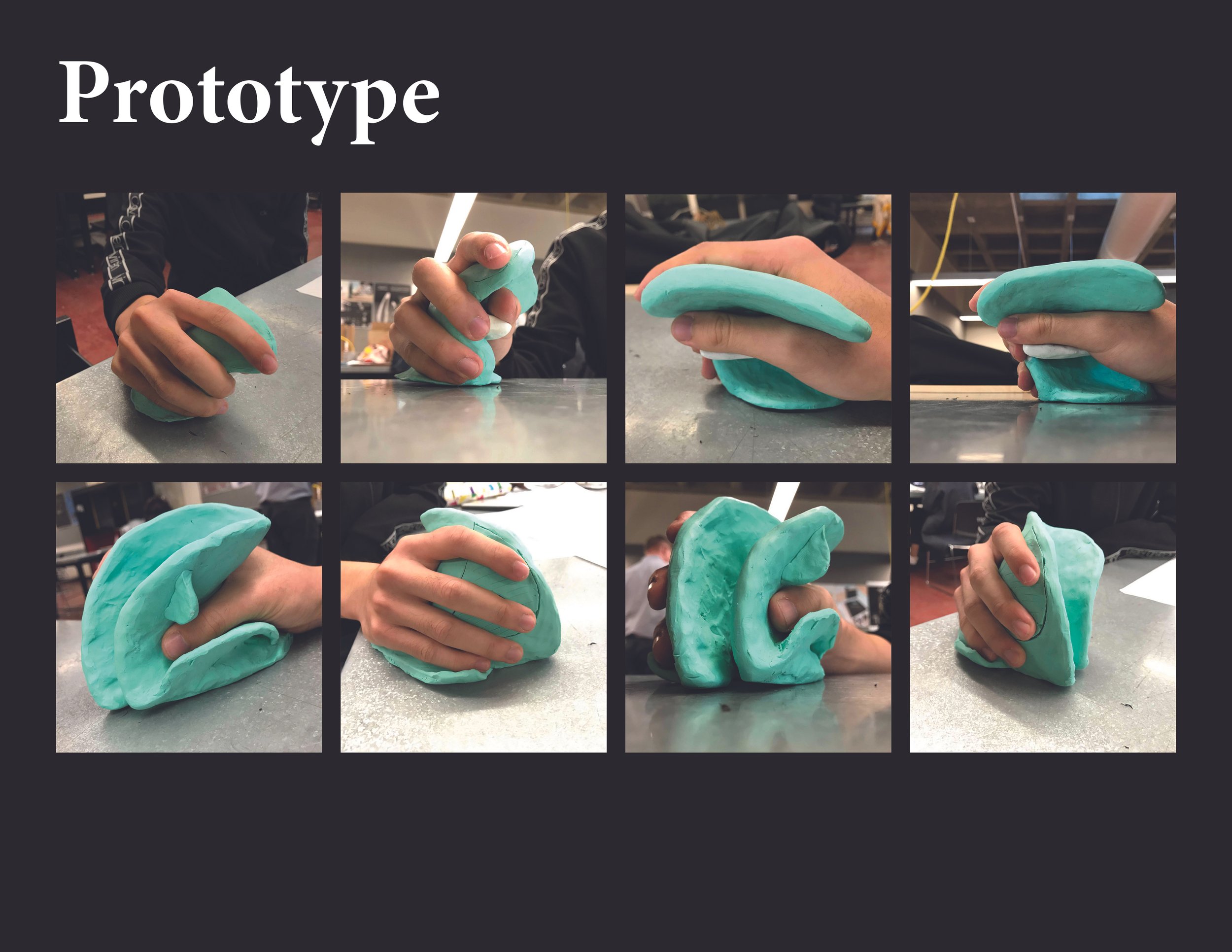
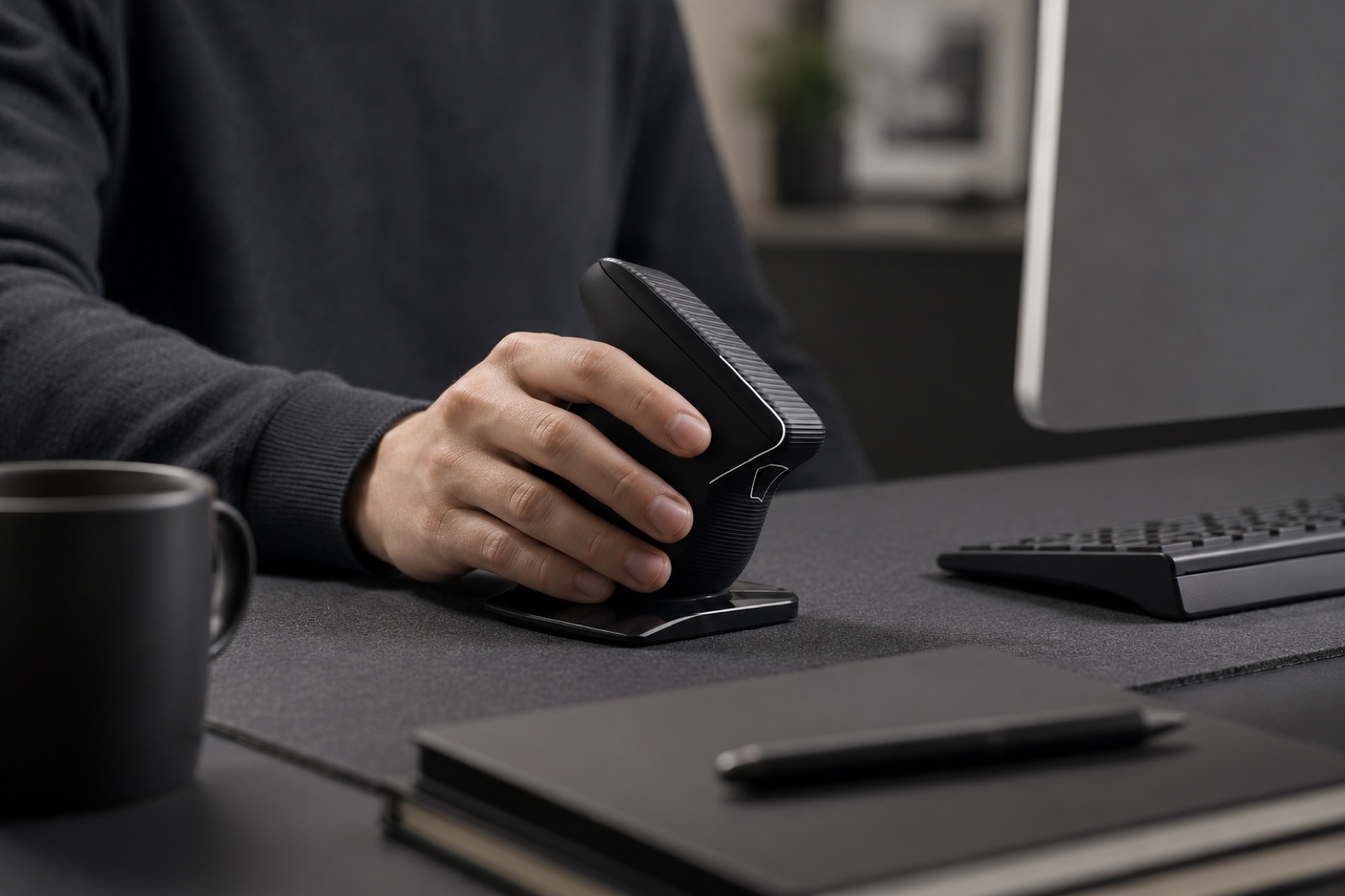
I explored a vertical mouse concept around the hand’s resting posture, using sketches and clay prototypes before refining the form in CAD. The goal was to investigate a more upright grip and support for the thumb and fingers.
Physical prototypes made it possible to compare the shape in hand and consider thumb support, finger placement, and overall volume.
Explore an upright grip as the starting point for the form.
Use physical models to examine where the thumb and fingers meet the object.
Adjust the sculptural shape around the grip before resolving surfaces in CAD.
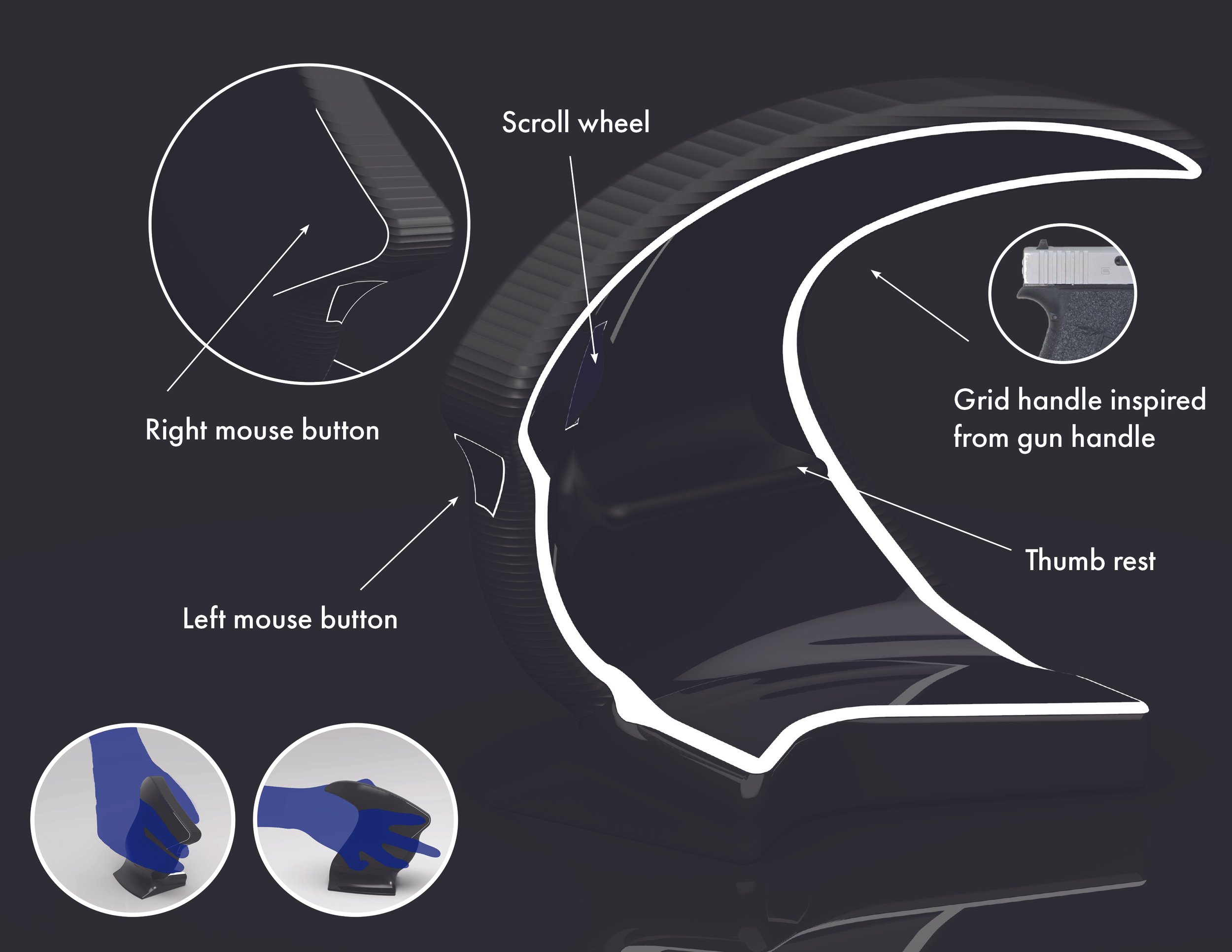
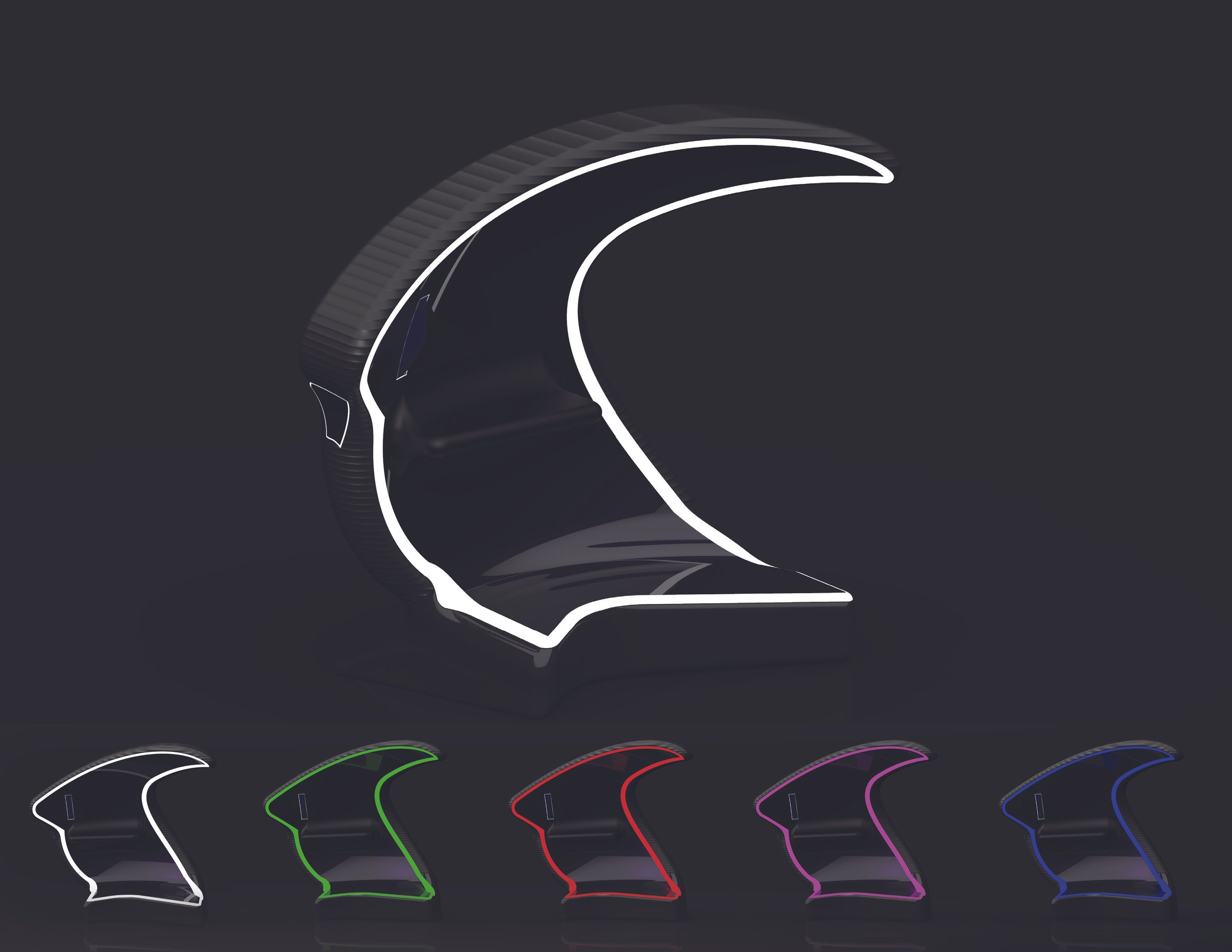
The final visualization documents the buttons, wheel, grip, and thumb support. The concept’s ergonomic goals would need further testing across hand sizes and everyday tasks.
The project connects sketching, physical exploration, CAD, and visualization. It remains a concept: broader comfort and usability validation would be the next stage.